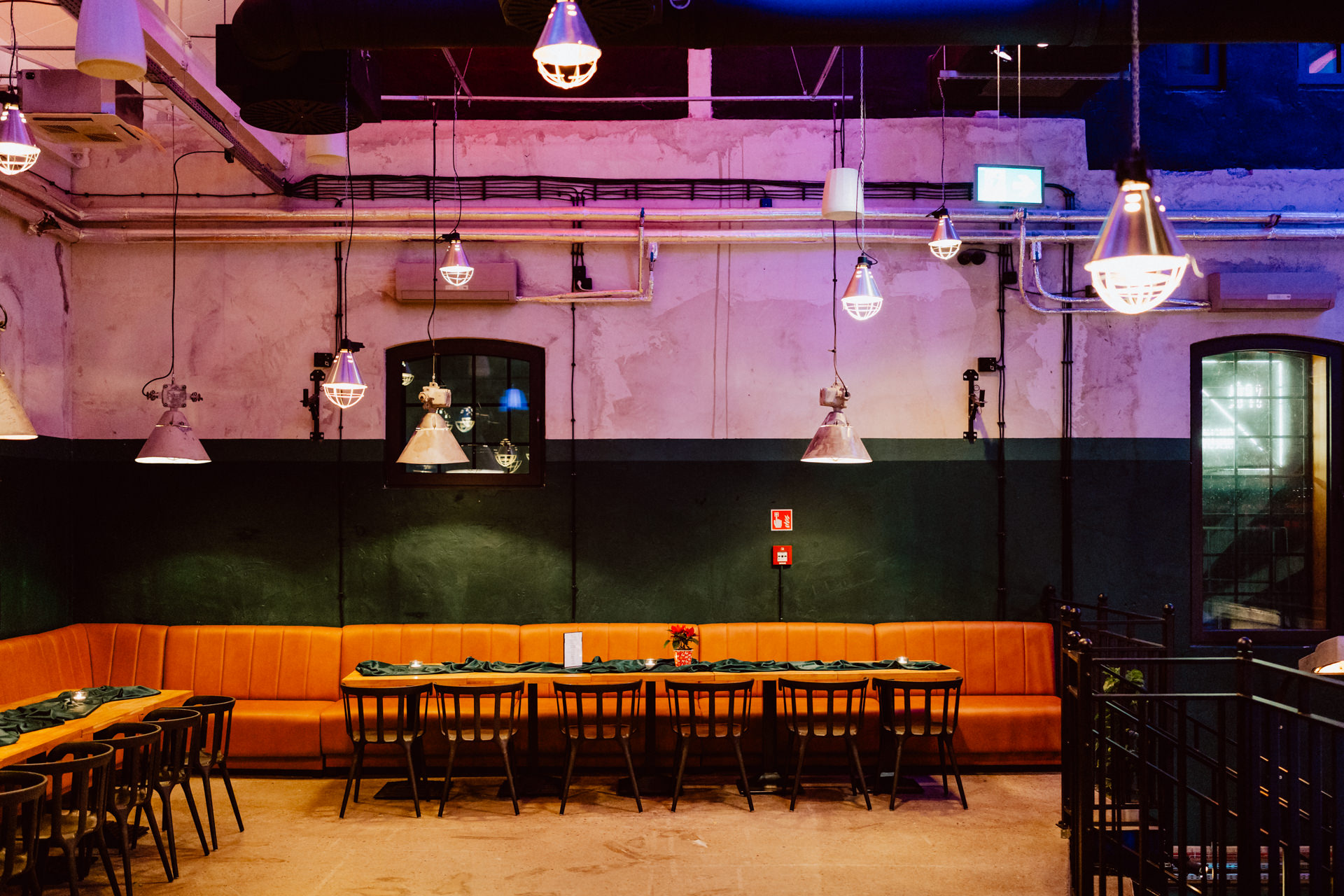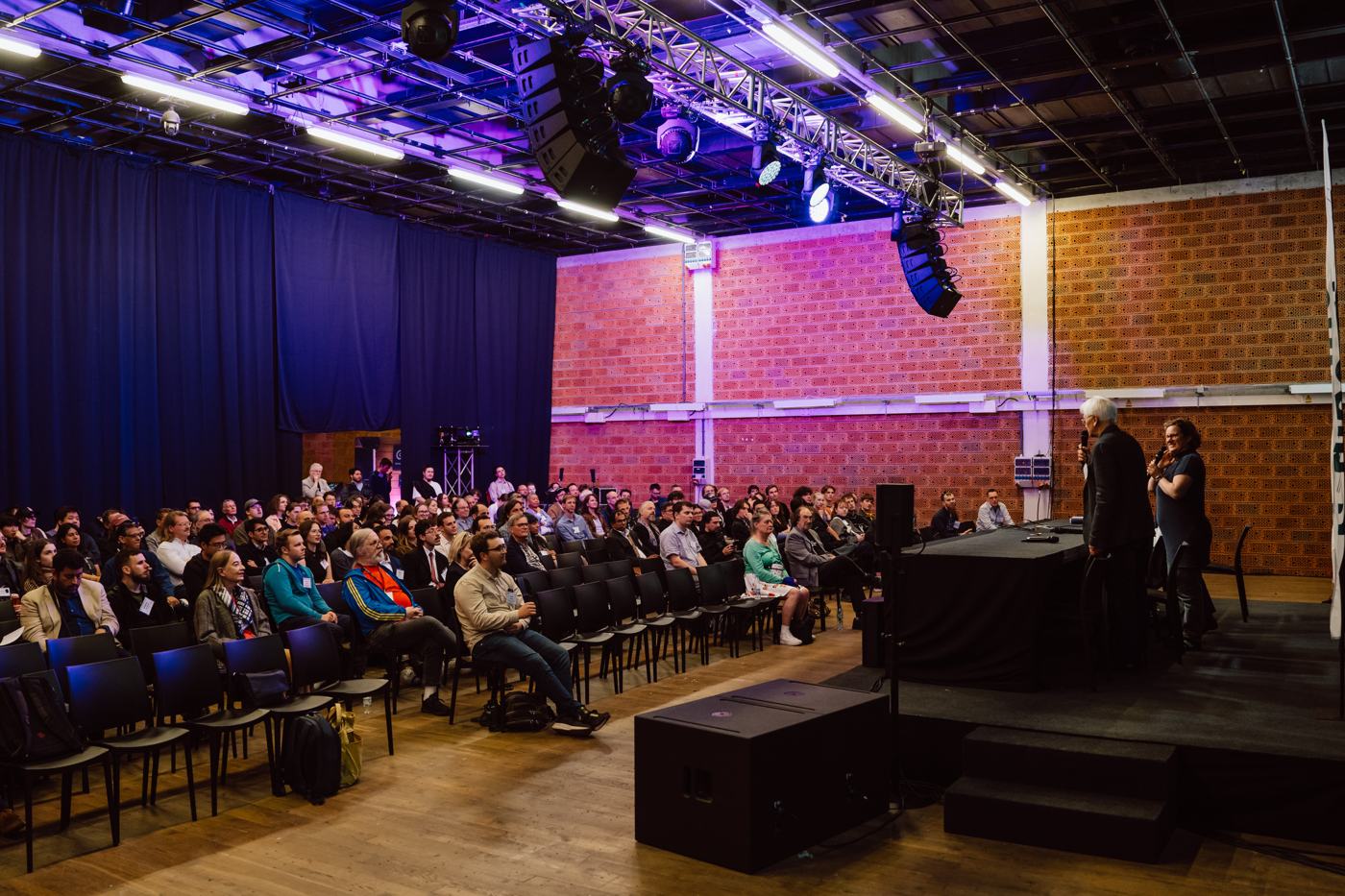
Most of what decides how the photos from an event turn out is settled before anyone takes the camera out.
I know how that sounds coming from a photographer. A bit like lining up an excuse in advance. But after more than a dozen years at conferences, trade fairs and galas , I see the same situations too regularly not to write about them: a dark room and a bright screen, a backdrop placed in a walkway, a partner’s CEO who left an hour before the scheduled group photo. None of these can be fixed in editing.
The good news: preparing an event for photography is not a separate project. It is a handful of decisions you make anyway when organising, only made consciously. In short: decide what the photos will be used for, prepare a list of people who must be in the material, mark the key moments of the agenda, check the stage lighting and the branding in the frame. And appoint one person to be the contact for the photographer. That is all.
Below I go through each of these points, show what happens when they are missing, and suggest how to put them together into a brief for the photographer. The checklist works regardless of who you work with.
Photos begin before the event
“Just take some nice photos” is the most common brief an event photographer receives. And the worst. Not because it is rude, but because nothing follows from it.
Photos are a record of what happens at the event. If the event has no moments, no people in motion and no visible brand, then the photos will not have them either. A photographer can get a lot out of difficult conditions. They cannot photograph networking that never happened.
There is another thing organisers think about less often. Documentation and communication material are not the same. Documentation confirms that the event took place. Communication material keeps working after the event: marketing looks in it for photos for social media, PR for context and key people, partners for their own presence in the event recap, and the sales team for selling points for the next edition. An event without photos you can actually use is wasted potential.
The difference between the two almost never lies in the photographer’s skills. It lies in the preparation.
How to prepare an event for photography: five things to settle
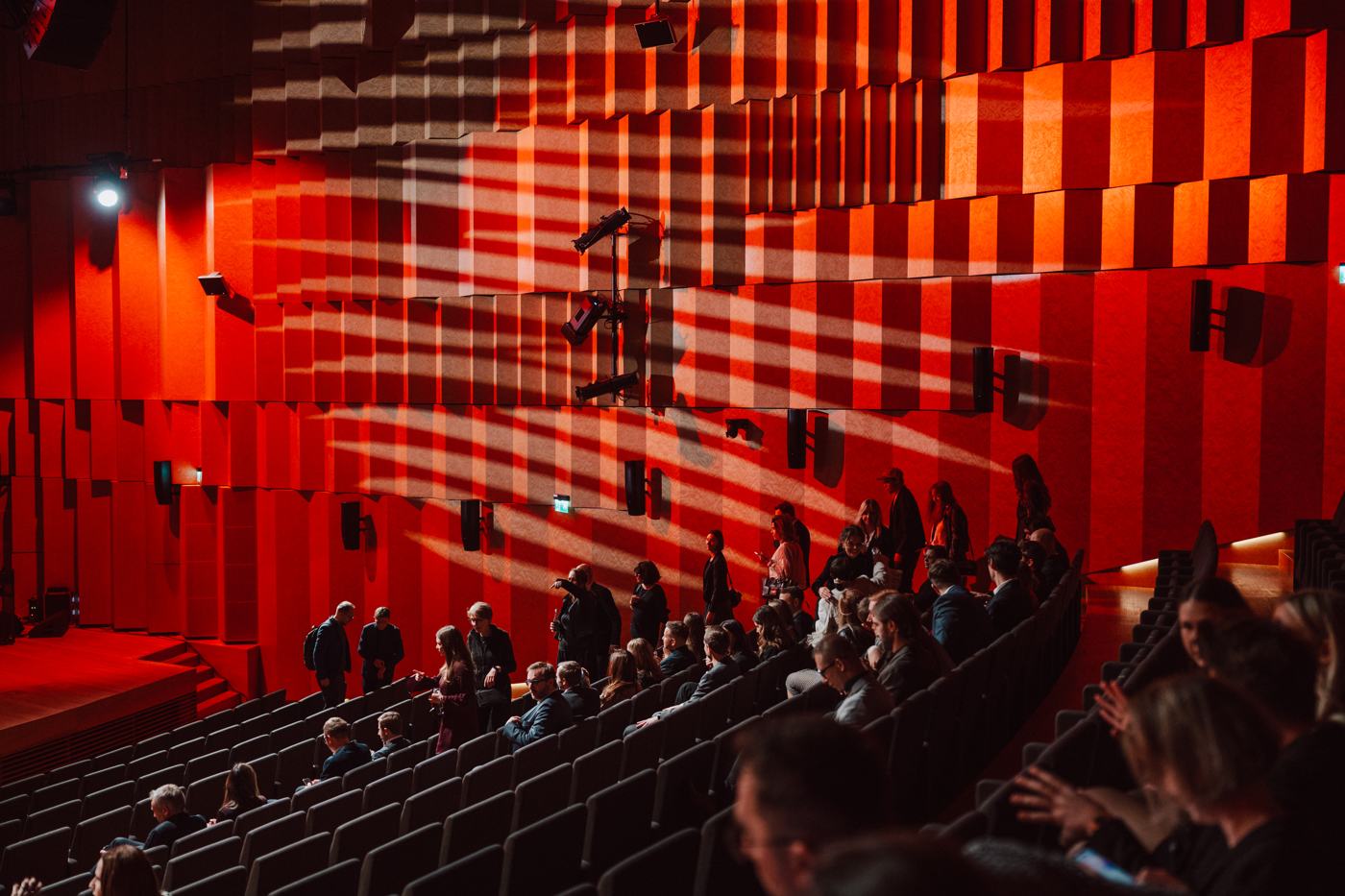
1. The purpose of the photos: where they will be used and what they should show
Start with a question that sounds trivial, yet few people answer it: what will happen to these photos after the event?
You will pick different photos for a LinkedIn recap, for a board report and for the website of next year’s edition. If the photographer knows the priority is to show the scale of the event to sponsors, they will look for wide shots of a full room. If the priority is the speakers, they will position themselves differently and at different moments.
Two or three things the material should show are enough. Without a purpose you will get random photos: fine, but not suited to anything in particular.
2. The VIP list and key people
The most common post-event stress starts with the sentence “we don’t have a photo of X”. Speakers, the board, partners: everyone who will ask you a week later, “do you happen to have my photo from the conference?”
The photographer does not know your guests. They do not know that the unassuming person in the third row is the investor the board cares about most. Prepare a short list of people who must appear in the material, and decide who will point them out on site.
At one of the events I covered, the VIP list had four names. That was enough to capture all the key handshakes during the break, before half of those people left for the airport.
3. Key moments of the agenda
The photographer needs to know when something important is happening. The opening, the keynote, a contract signing, an award ceremony, a group photo on stage. I once set this out as 10 conference shots worth having. These are moments that happen once and will not wait.
Send the agenda and mark the items that cannot be missed. One practical remark: the best conference photos are often taken not on stage but between the items of the programme. That is why an agenda with marked priorities works better than a request to “be everywhere”.
4. Stage lighting
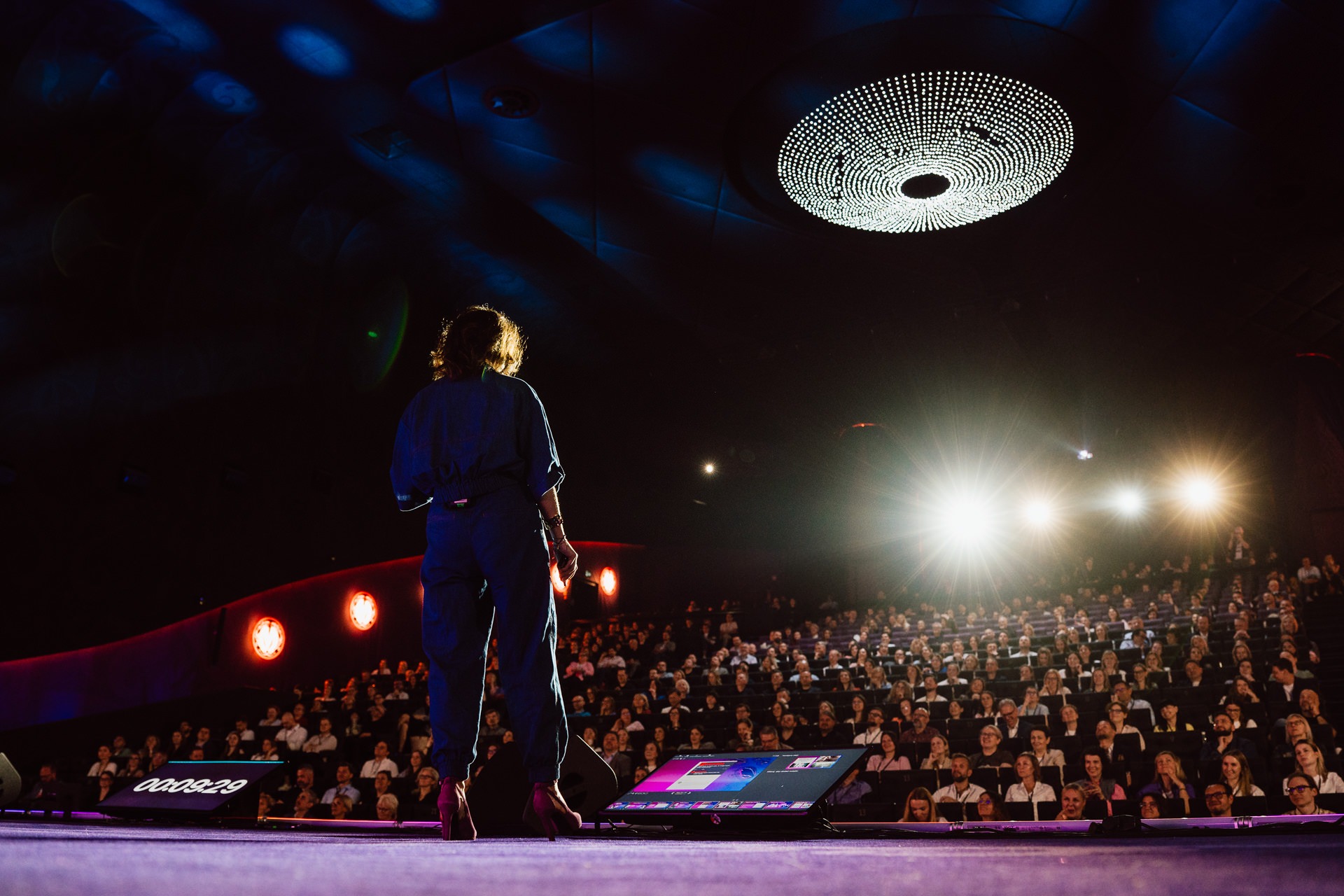
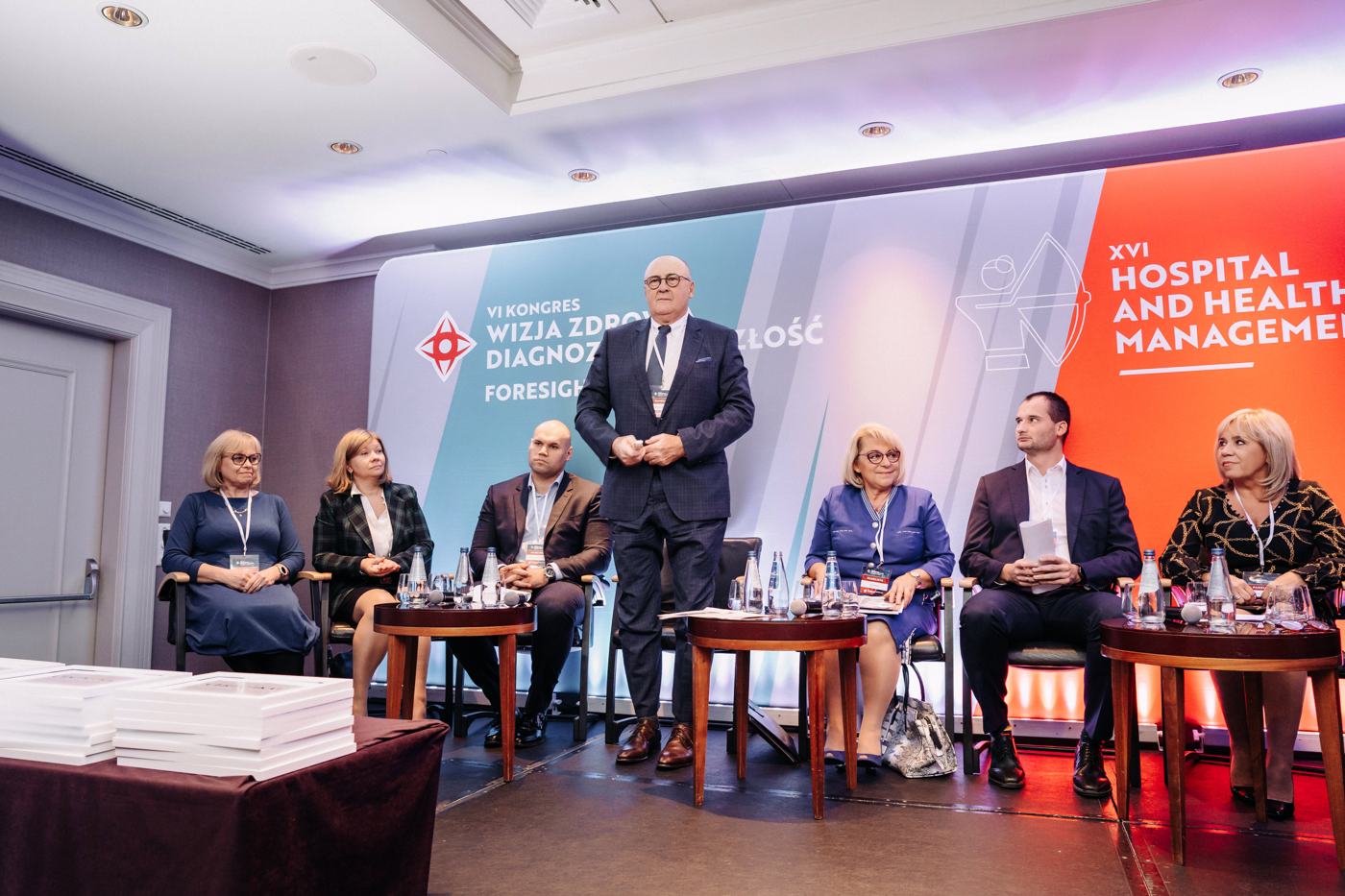
A classic of the genre: a dark room and a very bright screen behind the speaker. On top of that, the light is aimed at the background instead of the speaker. From the stage crew’s point of view everything is fine; from the point of view of photography the speaker is a dark silhouette against a glowing presentation.
You do not need to know anything about lighting. One question to the technical crew or the venue staff is enough: will the speaker on stage be lit more brightly than the screen behind them? If the answer is “we don’t know”, it is worth checking before the event, not during it.
Light is the only point on this checklist that no amount of work after the event can make up for.
5. Branding in the frame
Photos without a visible brand are pretty and anonymous. After two weeks nobody remembers which event they come from. And partners and sponsors look for themselves in the recap first and foremost.
Check three things: whether the logo is visible on stage, whether the backdrop stands where people actually walk and talk, and whether the partner signage is in places that will naturally appear in the frame. A backdrop in a dark corridor next to the cloakroom technically exists, but it will not be in the photos.
During the event: coordination and networking

One contact person for the photographer is the cheapest single thing that improves the material from an event. They do not have to follow the photographer all day. It is enough that they know the agenda and the people, and give a signal before something important happens: the CEO walks in in five minutes, a signing is about to take place, that conversation at the table is the meeting we care about.
Without such a person the photographer has to rely on guesswork. Guesses are sometimes right, but for moments that happen once I would rather not rely on them.
The second matter is networking. Breaks, conversations and movement around the stands make the best material from any event, because they show what cannot be staged: that people wanted to be there. If the agenda consists of talks only, and the breaks are so short that everyone is standing in the coffee queue, the material will be static. Room, stage, room, stage.
This applies to trade fairs too. An empty stand does not make for photos. A stand where someone is talking, testing a product or laughing makes them happen on its own. It is worth telling the exhibitors that the photographer will be moving around, and asking them not to hide behind the counter.
Every type of event has different priorities

What works at a conference will not necessarily work at a trade fair. A short summary of what each format involves:
Conference. Priority: the stage with the speakers, audience reactions and wide shots that convey scale. What to watch out for: material made up of slides and a lectern only. A stage without people says nothing about the event.
Trade fair. Priority: people at the stands, the product in use, branding in the background of conversations. What to watch out for: photographing the display instead of the interaction. Nobody is interested in a catalogue of stands, but the movement around them is.
Corporate event. Priority: people interacting and natural moments. What to watch out for: too many posed photos. Thirty arranged groups look like a school yearbook, not like an event where people had a good time.
Press and official event. Priority: key people, protocol moments, clear context. What to watch out for: no photo of the most important person at the most important moment. Here the VIP list and coordination matter more than everything else put together.
The brief for the photographer: what it should contain
All of the above comes together in one document that you send to the photographer before the event. A good event brief has seven parts:
- Basics: type of event, date, venue, number of attendees.
- Purpose of the photos: where they will be used and what they should show.
- Key moments: the agenda with marked priorities, the VIP list.
- Style and branding: the character of the event, the backdrop, logo, partners.
- Organisation: the contact person, networking breaks, space and light.
- Risks: things that may go wrong and that the photographer should know about in advance.
- Deadline: when you need the material and what for.
One A4 page is enough. The brief does not have to be elegant, it has to be specific.
If you do not want to put it together by hand, I have prepared a free tool that walks you through these questions and generates a ready-to-use brief in 2-3 minutes: Prepare your event for photos in 3 minutes. It works in ChatGPT, and a free account is enough. You can use the brief when working with any photographer.
The deadline: the last point, and the one remembered least often
The seventh point of the brief looks unremarkable, yet it decides whether the material has time to be useful at all. Photos that PR needs the next morning and photos needed for a year-end summary are two different jobs, even though the event is the same.
It is worth separating two things. I usually deliver the full material after selection and editing within a few working days, and that is the natural way of working. But if someone in your company is waiting for photos during the event or the next morning, that has to be planned separately: a smaller package of selected shots sent earlier, alongside the standard selection of the full set.
This arrangement has organisational consequences. A package prepared during the event needs a window in the agenda in which I can offload the cards and choose the material, without missing what is happening in the room. With a dense programme that means a second person for editing. It is hard to organise on the day of the event and easy at the brief stage.
I have described this in more detail in a separate post: photos during the event or the next day. Here one sentence in the brief is enough: who is waiting for the photos, by when, and what they need them for.
What cannot be fixed after the event
Finally, a list of things that are settled irreversibly on the day of the event. I write about them separately because they are the ones most often behind disappointment with the material:
- Light. A speaker who is not lit stays unlit in every photo.
- People in the frame. An empty room and empty stands will not turn into a crowd.
- Key people. A VIP who left unphotographed will not come back.
- Moments. A contract signing takes ten seconds and there is no replay.
- Expectations. If the event is static, there will be no dynamic photos from it. Better to know that before the event than after.
I am not writing this to frighten you. Each of these points is settled with one organisational decision, made early enough. That is the whole secret of events whose material looks as if it “just came out right”.
FAQ: the most common questions about preparing an event for photography
The earlier the better, but realistically: a week before the event is comfortable, and two or three days is still time well spent. Even a brief sent the day before works better than a five-minute conversation on site when the event is already under way.
They know how to photograph. They do not know who is who at your event, which item on the agenda is key for the board, and where the photos will be put to work afterwards. Experience lets me predict the course of a typical conference, but it does not replace the information that the most important conversation of the day will take place at a table in the corner, away from the stage.
There is no single number, because it depends on the scale and the agenda. The rule is different: a break must be long enough for people to get beyond the coffee queue and into conversations. That is exactly when you get the photos that show the event was alive.
Yes, only a shorter one. At an intimate event it is even easier to end up without a photo of the one person who really matters, because nobody said they were important. Half a page with the purpose of the photos, three names and two moments is enough.
Someone who knows the agenda and the people, and at the same time is not the busiest person in the room. The main organiser is usually ruled out, because on the day of the event they are putting out fires. Someone from the organising team or from the agency running the event works well.
Yes, and it is one of the more important points. Write who is waiting for the material and by when. If the photos are to go to the media on the day of the event or the next morning, say so before the event, because it requires a different way of working than the standard delivery of the whole set.
Summary
Preparing an event for photography comes down to five arrangements before the event, one contact person during it and an A4 page of brief. Not much, considering that the entire event budget is at stake, along with the material the company will use for a year.
Since 2012 I have been photographing conferences, trade fairs and company events, for clients including Toyota, mBank and Danone. I photograph more broadly than just the stage and a few smiles for the camera, but I work best where the organiser knows what they need. This checklist is meant to help with that.
If you are preparing an event and want to talk about photos: send me the date, the venue and the approximate hours. I will come back with a specific proposal for the scope and a quote.
Related posts: how much an event photographer costs and when one photographer per event is not enough. Also see what event photography in Warsaw looks like in practice.