
How it works on site
Backdrop, studio light, camera
Someone walks up, we take a few frames, they go back to the session. No time slots, no sign-up sheets, nobody drops out of the programme. The queue moves on its own and one person takes two to three minutes.
At that pace the station handles 12 to 18 people per hour. With an assistant managing the queue, 15 to 25.
Rhythm of the day, not the whole day
Where it fits in the agenda
Traffic at the station is never evenly spread. People come during registration, coffee breaks and lunch. While sessions run, the station stands empty.
Registration
First people walk up before they even take their seat.
Coffee breaks
A natural moment when attendees are already standing around, talking.
Lunch
The longest window in the agenda and usually the strongest for the station.
A block placed over registration and two breaks usually serves as many people as eight hours spread out at random. Typically 20 to 40 percent of your attendees come to the station. A 200 person conference means 40 to 80 people, not 200.
Attendees and organisers
Two sides of the same station
A headshot station gives something to different people on both sides of the same event.
What your attendees get
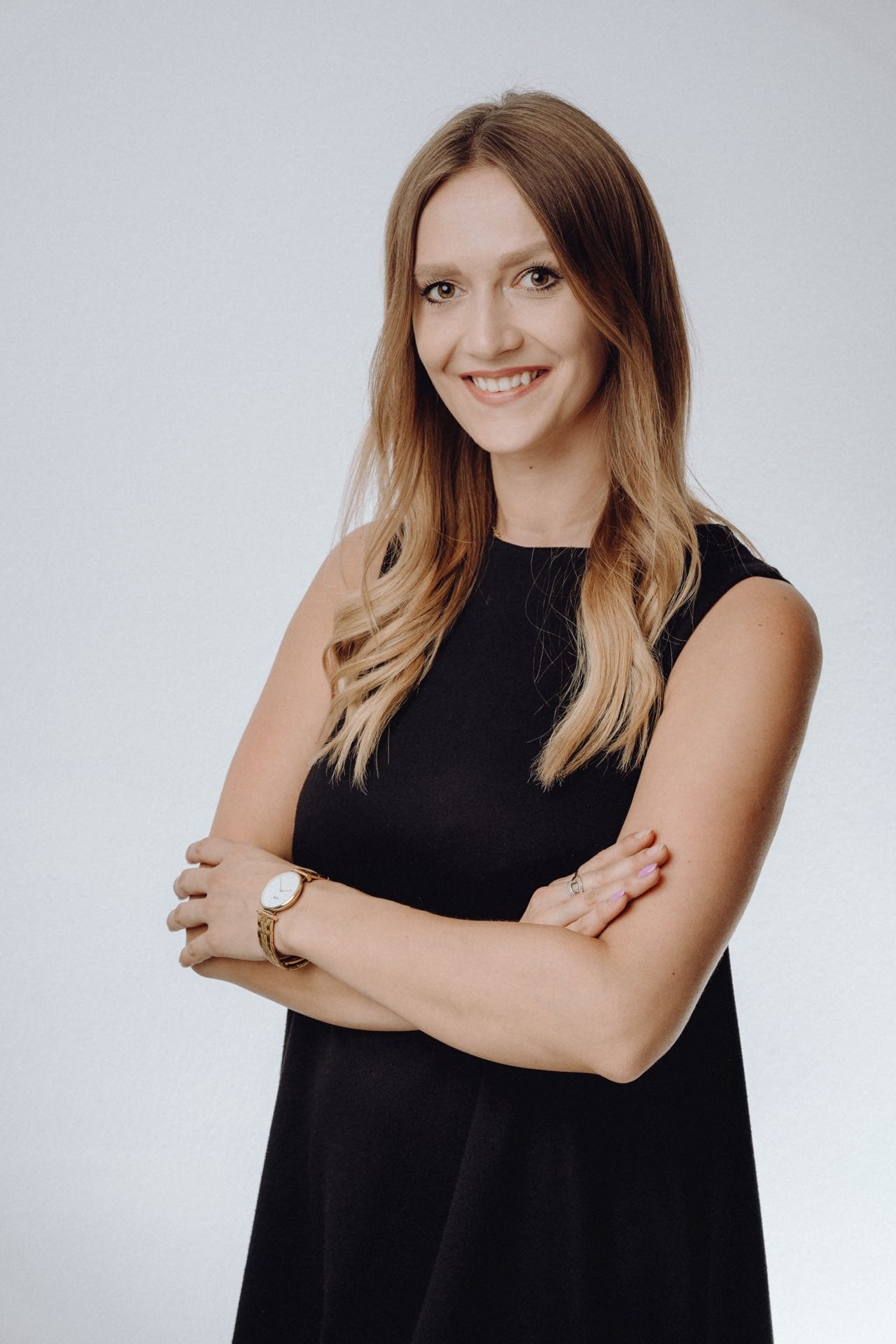
A portrait that works for a speaker bio, a LinkedIn profile and an email signature. One photo instead of a face cropped out of a group shot.
What you get
An agenda item nobody has to be talked into. People queue up on their own, because they get something for themselves rather than another item for the conference bag. After the event you get a gallery and a quiet inbox. Nobody asks for their photo, because everyone already has it.
Pricing
Packages and pricing
Prices, net. Match the block to the agenda, not the whole day.
Station for 4 hours
PLN 2,900 net
A block placed over one or two windows in the agenda, e.g. registration and a break.
Station for 8 hours
PLN 4,500 net
Covers registration, both coffee breaks and lunch. Maximum throughput across the day.
Assistant managing the queue
PLN 700 net
On site for the whole block. Raises throughput by roughly half, because I then only shoot.
The assistant raises throughput by roughly half, because I then only shoot. At a large conference this is what keeps the queue moving.
Honest, so nobody counts differently than I do
What is included, and what is not
What is not included:
- Studio retouching (skin smoothing, individual work on each frame). If someone needs that, it is a separate conversation and a separate quote.
- On site printing. Photos go to the gallery, not to a printer.
I put this in writing so that nobody counts differently than I do.
After the event
How photos reach people
You leave your email at the station
A QR code and the phone already in their hand are enough.
You get an invitation to the gallery
The invitation arrives by email after the event.
You find yourself and download your photos
The email address is used only to send the gallery.
Questions and answers
Questions I always get
Turnout, booking, personal data and how this differs from a photo booth.
The price covers the station and the time, not the number of photos. You pay for the station standing ready through an agreed block, not for turnout that nobody controls.
No. They walk up whenever they have a moment. Time slots work for a studio session at your office, not for a coffee break between talks.
The station handles as many people as it can within the block. At a large conference it is worth adding an assistant or placing the block over more windows in the agenda.
The gallery is shared with the event attendees and I say so at sign-up. If somebody does not want to be there, I remove their photos.
A photo booth is entertainment: a print, props, a souvenir from the party. Here the point is a portrait somebody will use at work for years. Different gear, different light, different outcome.
Safeguards for your booking
What you can rely on before you confirm the date
- Price guarantee The amount in the quote is final. No additional costs appear during the event or after it.
- Cover if I can’t make it If illness or an accident stops me on the day of the event, I immediately look for a replacement among trusted photographers I work with, and let you know.
- Two cards and an encrypted cloud backup My camera records each photo to two memory cards at once. After the event, the material goes to a working drive and straight into an encrypted cloud backup, and I bring backup equipment to every job. Even losing my gear would not cost you a single photo.
- Archive for at least 5 years I keep the selected photos from the event for at least 5 years, so I can export or edit them again later if needed.